Worried about nutrient deficiency on Ozempic or Wegovy?

Before you feel the fatigue, the hair thinning, or the muscle loss. GLP-1 Shield fills exactly what your reduced appetite is leaving behind - whether you're on Ozempic, Wegovy, Mounjaro, Zepbound, or orforglipron.
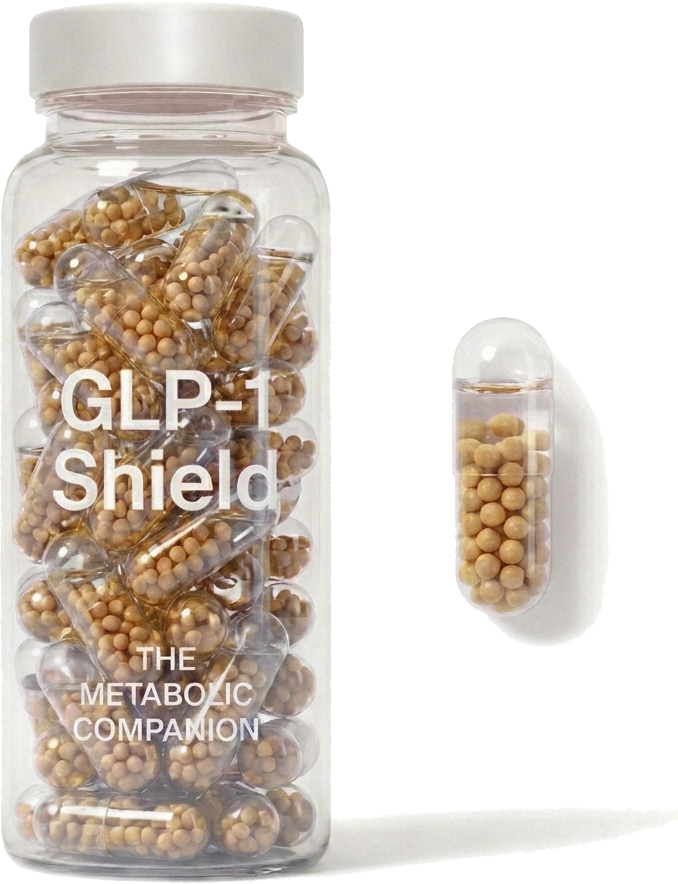
GLP-1 Shield supplement bottle - metabolic companion for GLP-1 patients
How it works

A protocol that evolves with you.

Assessment

Tell us how you are

A two-minute check-in maps your stage, symptoms, and goals.

Gap analysis

See which vitamins GLP-1 is leaving behind

We show the gaps opened by your appetite reduction based on clinical research in GLP-1 patients.

Tailored protocol

Get your matched protocol

A subscription that ships the right protocol for your current needs.

Reach the end of your journey - nourished.

From the research

What vitamins are you deficient in on GLP-1?

Every GLP-1 journey is different. The nutrient gaps are not.

The most commonly documented deficiencies in GLP-1 patients are vitamin B12, vitamin D3, magnesium, and iron. These gaps emerge because appetite suppression reduces total food intake, and slower gastric emptying reduces B12 absorption specifically. Research shows up to 22% of GLP-1 patients become newly deficient within 12 months.

Supplements for Ozempic patients What we know about nutrient deficiency on GLP-1 medications right now GLP-1 nutrient deficiency What vitamins are you deficient in on GLP-1 medications? Ozempic rebound What happens when you stop taking Ozempic or Wegovy? Muscle loss on GLP-1 Muscle loss on GLP-1 medications: what the research actually shows
Common questions

What patients ask about GLP-1?

Nutrients and supplements

What vitamins should I take on Ozempic?
People on Ozempic most commonly become deficient in vitamin B12, magnesium, vitamin D3, and iron. These gaps open because appetite suppression reduces total food intake and GLP-1 drugs slow gastric emptying, which can reduce absorption. A protocol targeting these four nutrients - plus omega-3 and zinc - covers the deficiency patterns seen most frequently in clinical studies.
What vitamins should I take on Zepbound or tirzepatide?
Zepbound (tirzepatide) activates both GLP-1 and GIP receptors, but the nutritional consequence is similar to semaglutide: significantly reduced food intake means reduced intake of B12, magnesium, vitamin D3, and iron. Current evidence suggests the same deficiency profile applies to tirzepatide patients as to semaglutide patients. GLP-1 Shield is formulated to support patients on all injectable GLP-1 medications, including Zepbound and Mounjaro.
What should I take on Foundayo (orforglipron)?
Foundayo (orforglipron) is the first oral GLP-1 receptor agonist approved for weight loss. Unlike injectable semaglutide or tirzepatide, it is a small-molecule non-peptide - but its effect on appetite and food intake is similar: significantly reduced calorie intake means the same pattern of B12, magnesium, vitamin D3, and iron depletion documented in injectable GLP-1 patients. GLP-1 Shield is formulated to support patients on all GLP-1 medications, including Foundayo and orforglipron.
Does GLP-1 medication cause nutrient deficiency?
Indirectly, yes. GLP-1 medications like Ozempic, Wegovy, and Mounjaro reduce appetite significantly, so patients eat fewer calories and take in fewer vitamins and minerals. Slower gastric emptying can also reduce absorption of B12 and other nutrients. Research shows B12, magnesium, iron, and vitamin D are the most commonly affected.
Should I take supplements while on Ozempic or Wegovy?
For many people it is reasonable, but it is best guided by bloodwork rather than guesswork. Because appetite suppression makes it hard to eat a full, varied diet, a targeted supplement covering the nutrients most likely to run short - protein, B12, vitamin D, iron and magnesium - can help. Talk it through with your prescriber, especially if you take other medications.
Do I need a multivitamin if I take semaglutide or tirzepatide?
A daily multivitamin is a reasonable default because food intake, and the micronutrients that come with it, drops sharply on these drugs. It does not replace testing, though. Nutrients that are already low, like vitamin D or iron, usually need a larger targeted dose than a multivitamin delivers.
When do nutrient deficiencies show up on Ozempic or Wegovy?
One analysis of 461,382 patients found diagnosed deficiencies in 12.7% of people within 6 months and 22.4% within 12 months, so the risk clearly rises across the first year. Some gaps, like magnesium, can open faster if you have ongoing diarrhea; others, like vitamin B12, deplete quietly over many months. That is why testing at both 6 and 12 months makes sense even when you feel fine.
What happens to your nutrient levels when you stop taking GLP-1 medication?
When you stop a GLP-1 medication, appetite typically rebounds - but the nutrients depleted during treatment do not automatically recover. B12, iron, vitamin D3, and magnesium levels that dropped during reduced food intake remain low unless actively replaced. Research on GLP-1 discontinuation shows that most weight lost during treatment is regained within months, partly because the nutritional foundation was never restored. Maintaining a targeted supplement protocol through and after discontinuation helps protect the gains you made.

Testing and monitoring

What blood tests should I get on GLP-1 medications?
A sensible baseline panel covers vitamin D, B12, folate, ferritin and iron, calcium, magnesium, and a basic metabolic panel, ideally before you start. Recheck the ones that came back low, plus vitamin D and B12, at 3 months, then repeat the full panel at 12 months and yearly after that. None of this is an official guideline yet, so raise it with your prescriber.
How often should I check my vitamin levels on Ozempic or Wegovy?
Adapting the schedule used after bariatric surgery, the reasonable intervals are before starting, then at 3, 6 and 12 months, then once a year. Check more often if a level comes back low or you develop symptoms like fatigue, hair loss or muscle weakness.
Should I supplement even if I feel fine?
Deficiencies build quietly, and symptoms lag months behind the actual drop in your levels. Feeling fine at month 3 does not mean your stores are still full at month 12. Testing is the only way to know for sure, and a daily multivitamin plus adequate protein is a low-risk floor to stand on while you wait for results.
My doctor did not order any nutrient tests. Is that normal?
Unfortunately, yes. In one large cohort more than 90% of patients had no dietitian contact before starting, and routine micronutrient screening is not standard practice for GLP-1 prescriptions the way it is for bariatric surgery. You can ask directly for a panel covering vitamin D, ferritin, vitamin B12 and magnesium. It is inexpensive and can catch a deficiency long before you would feel symptoms.
Why didn't my doctor give me a diet plan with my GLP-1?
Partly because the trials behind these drugs rarely studied diet, so there is little standardised, drug-specific guidance to hand out. A 2025 review found only 8% of GLP-1 and related trials reported dietary outcomes, and none tracked fiber or supplements. That leaves diet advice down to individual clinicians, many of whom are stretched for time. Asking for a dietitian referral is a fair request.

Muscle, bone and hair

How do you prevent muscle loss on GLP-1 medication?
GLP-1 medications reduce appetite effectively, but they do not distinguish between fat and muscle when the body is in a calorie deficit. Studies show that a significant proportion of weight lost on GLP-1 drugs can come from lean mass. The evidence-backed approach involves adequate protein intake, resistance training, and targeted supplementation - particularly magnesium and omega-3, which support muscle protein synthesis.
How much protein should I eat on a GLP-1?
A commonly cited target is 1.2 to 1.6 g of protein per kg of body weight per day, aimed at protecting muscle while you lose fat. Spread it across meals at roughly 25 to 40 grams each. That figure comes from broader weight-loss research rather than from GLP-1 trials specifically, since almost none measured protein intake. Prioritising protein at the start of each meal is the practical way to hit it on a small appetite.
Does Ozempic cause hair loss? What can you do about it?
Hair thinning is commonly reported among GLP-1 patients. The clinical term is telogen effluvium - a temporary shift in the hair growth cycle triggered by rapid weight loss and the nutritional changes that come with it. Deficiencies in biotin, zinc, iron, and protein are the most common contributing factors. In most cases it is temporary and resolves as nutrition is restored and weight stabilises. A supplement protocol addressing these specific gaps - particularly zinc, iron, and biotin - may help shorten the timeline.
Do Ozempic and Wegovy actually cause osteoporosis?
Five-year data links GLP-1 medications to a modestly higher osteoporosis rate, 4.1% versus 3.2% in matched patients. The increase is real but small in absolute terms, and it appears closely tied to rapid weight loss and low vitamin D rather than a direct effect on bone. Protein, vitamin D, calcium and resistance training can offset much of the risk.
Should I take calcium and vitamin D while on a GLP-1?
For most people, yes, though the right dose depends on your blood levels. Low vitamin D drives poor calcium absorption and is one of the direct contributors to the soft-bone signal seen in the research. Ask your prescriber to check your vitamin D level and adjust from there rather than guessing.
Will bone loss reverse if I stop the medication?
This is still being studied. Bone responds slowly, and some density lost during rapid weight loss may not fully return, especially in older adults. That is the argument for protecting bone while you are on treatment rather than hoping to rebuild it later. Resistance training and adequate nutrition are the most reliable tools either way.

Side effects and safety

Does Ozempic cause kidney damage?
Serious kidney injury on semaglutide (Ozempic, Wegovy) is uncommon, but it does happen, usually through dehydration when nausea, vomiting or diarrhea leave you short on fluid. A 2025 analysis of FDA adverse-event reports found semaglutide flagged for acute kidney injury more often than tirzepatide. The absolute risk is low, and staying hydrated is the single best protection.
Is tirzepatide safer for the kidneys than semaglutide?
One pharmacovigilance study found tirzepatide had a lower acute kidney injury reporting rate (0.47% versus 1.07%), but reporting rates are not the same as real-world risk. That is not enough on its own to call tirzepatide kidney-safer. The kidney risk on either drug is mostly about dehydration, which you can manage regardless of which one you take.
What are the signs of kidney problems on a GLP-1?
Watch for a big drop in how much you urinate, dark urine, swelling in the legs, ankles or face, unusual tiredness, or confusion, especially during a spell of vomiting or diarrhea. Any of these is a reason to contact your clinician promptly rather than pushing through.
Should I stop my GLP-1 if I get sick with vomiting or diarrhea?
Possibly, and it is worth asking your prescriber before it happens. When you cannot keep fluids down, continuing a GLP-1 along with NSAIDs or certain blood pressure medications raises the risk of kidney injury. Many clinicians advise a temporary pause on those medicines until you can drink and eat normally again.
Can Ozempic or Wegovy cause blindness?
These medications are linked to a small increase in ischemic optic neuropathy, a rare condition that can cause permanent vision loss in one eye. The risk is very low, on the order of one extra case per 2,500 to 3,300 people treated, and the 2026 studies could not prove the drug directly causes it. For most people the benefits outweigh this risk, but any sudden vision change should be treated as an emergency.
What are the warning signs of NAION?
The classic sign is sudden, painless loss or dimming of vision in one eye, often first noticed on waking. Some people describe a dark area or a curtain over part of their sight, and there is usually no pain. Because early assessment matters and the damage can be permanent, any sudden vision change while on a GLP-1 medication should be checked the same day.
Should I stop my GLP-1 medication because of the eye risk?
Not on your own. Eye specialists reviewing the 2026 data concluded that the benefits still outweigh this small risk for most patients, and that no extra screening is needed beyond standard care. If you have several risk factors, such as being over 50, male, or having had this condition in one eye already, discuss it with your doctor rather than stopping abruptly.

Medications, old and new

Can you take berberine with Ozempic?
Berberine has modest evidence for supporting blood sugar regulation, and some patients take it alongside GLP-1 medications. The combination is understudied and both compounds affect glucose metabolism - so combining them without medical guidance carries some risk. More importantly, berberine does not address the nutrient deficiency side of the GLP-1 equation: it does not replace the B12, magnesium, vitamin D, or iron your reduced appetite stops delivering. GLP-1 Shield is built around those specific deficiency patterns - not a general metabolic booster.
When will retatrutide be available by prescription?
Lilly plans to submit its application to the FDA in the first quarter of 2027. With a standard review taking around ten months, the earliest realistic approval is late 2027, and 2028 is more likely once manufacturing and labelling steps are factored in. No approval is guaranteed until the FDA rules.
How much weight can you lose on retatrutide?
In the Phase 3 trials reported so far, average loss at the 12 mg dose was 28.3% in adults with obesity, 20.8% in adults with type 2 diabetes, and 22.6% in adults with severe obesity and heart disease, all over 80 weeks. Individual results vary widely, and these are averages from trial conditions with structured support.
Is retatrutide better than Zepbound or Wegovy?
On weight loss, the trial numbers are higher than anything approved today. But retatrutide has never been compared directly against tirzepatide or semaglutide in a head-to-head trial, and comparing across separate trials with different populations is unreliable. The honest answer is that it looks stronger and has not yet been proven stronger.
Can I buy retatrutide now?
Not legitimately. It is not approved in any country, so there is no licensed supply. Vials sold online as research chemicals are made outside pharmaceutical quality standards, with no assurance of dose, purity or sterility. Talk to your prescriber about approved options instead of sourcing an unapproved peptide.

Pregnancy and gestational diabetes

Is it safe to take Ozempic or Wegovy if you have gestational diabetes?
No clinical trials have tested semaglutide (Ozempic, Wegovy) specifically for gestational diabetes. Semaglutide is contraindicated in pregnancy based on animal safety data showing developmental risks at human-comparable doses, and the FDA label requires stopping it before pregnancy. Existing safety data on GLP-1 medicines in gestational diabetes relates only to older medications at lower doses in mid-to-late pregnancy, and should not be used to justify semaglutide use in pregnancy.
Can GLP-1 medications be used to treat gestational diabetes?
GLP-1 medications are not currently approved for gestational diabetes. A 2025 systematic review of 8 clinical trials found that older GLP-1 medications (liraglutide, exenatide) used in the second and third trimester showed no significant increase in congenital malformations or perinatal mortality, with better glucose control than placebo. However, those trials were small, used lower-dose older drugs, and did not study semaglutide or tirzepatide. Treatment currently relies on dietary modification, insulin and metformin.
What nutrients matter most in pregnancy with gestational diabetes?
Pregnancy requirements, dietary management of gestational diabetes, and appetite suppression can compound into real nutritional risk. The most important nutrients to monitor are iron (preventing anaemia and supporting fetal development), folate (neural tube development, critical in early pregnancy), vitamin D (glucose metabolism, immune function and fetal bone development), and calcium. Vitamin B12 also matters given its role in neurological development. This population needs a full nutritional assessment with their clinician.

About GLP-1 Shield

What is GLP-1 Shield and how does it work?
GLP-1 Shield is a phase-adaptive supplement protocol designed specifically for people on GLP-1 medications. It identifies which nutrients your reduced intake is leaving behind and delivers a targeted formula that changes as your journey progresses - from early titration through deep weight loss and into long-term maintenance.
How is GLP-1 Shield different from a standard multivitamin?
Standard multivitamins are designed for people eating a normal diet. GLP-1 patients face a specific combination of reduced intake plus altered absorption - so the gaps are different in type, size, and timing. GLP-1 Shield is formulated around the deficiency patterns clinically documented in GLP-1 patients, and adapts to your phase rather than delivering a static one-size-fits-all dose.

GLP-1 handles
the weight loss. We handle the rest.

As your plate shrinks, so does your intake of B12, magnesium, vitamin D3, and iron - quietly, before you feel it.

  • Muscle loss
  • Bone density loss
  • Hair thinning
  • Fatigue
  • Weakened immunity
  • Brain fog

Don't wait until you feel it.

Be among the first to get your protocol. Takes 30 seconds.